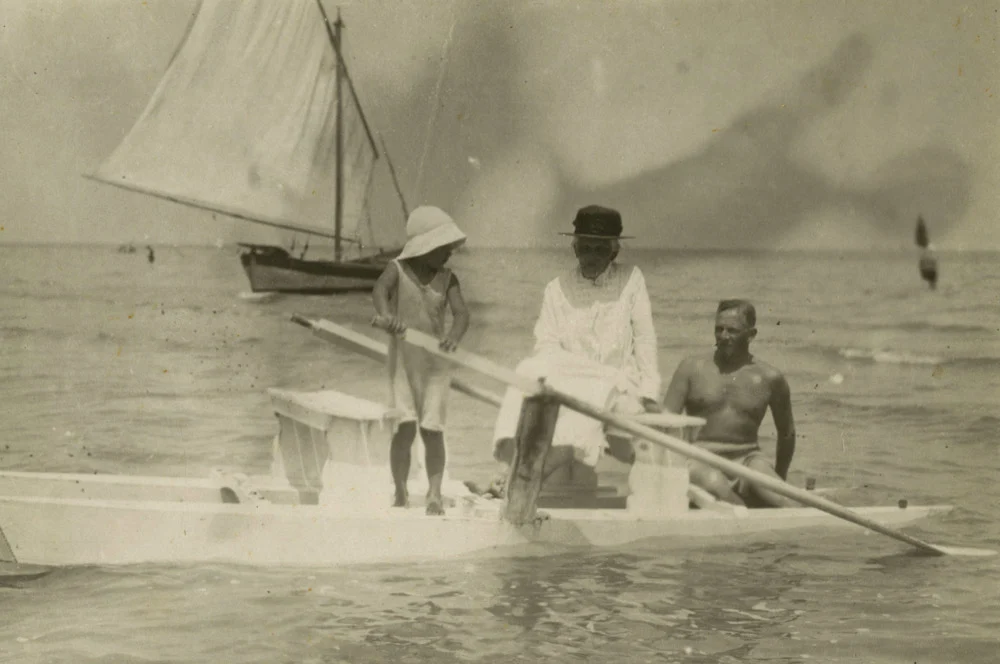
Adam Stadnicki and the Nawojowa Estate
Adam Stadnicki (1882–1956) was the patriarch of the Nawojowa estate in the Beskid Sądecki mountains south of Nowy Sącz. A passionate forester, devoted father of eight, and quiet wartime resister, he is remembered across multiple tape-recorded interviews by his son-in-law Prince Adam Czartoryski and by his daughter Jadwiga in a family video recording.
The Estate
Stadnicki inherited approximately 3,000 hectares around Nawojowa and expanded the holdings to some 9,000 hectares through strategic acquisitions — including the spa town of Szczawnica and forests near Rytro. The estate was overwhelmingly wooded: forestry, not farming, was its economic backbone. Stadnicki built a modern sawmill and pioneered the export of timber, rising each day at four in the morning to oversee operations himself.
Nawojowa lay closer to Kraków than the family’s second property. Before his marriage to Helena Sapieżyna, Stadnicki modernized the manor house, installing plumbing and a new bathroom — small comforts that nonetheless signalled his practical, forward-looking temperament.
Frain — The Castle in Czechoslovakia
Stadnicki also inherited Frain (Vranov nad Dyjí), a castle in Moravia passed down from his grandmother. During the First World War the entire family took refuge there. Jadwiga recalled the castle surrounded by deep forest:
“The whole castle was surrounded by forest, and when we lay in our beds we could hear the stags roaring in the woods. From the drawing room there was a view onto the forest through a telescope, and we would always stop to look for deer. There was one stag who always appeared when we played the Hungarian March.”
Hunting was central to life at Frain. Stadnicki insisted on conservation: a stag could only be shot once it was fully mature. His approach to forests everywhere was the same — patient stewardship rather than extraction.
The Forester
Forestry was Stadnicki’s great love. He managed woodlands both at Nawojowa and at the Czech estate with equal devotion. When his five daughters and three sons were growing up, he took the boys into the forests and taught them how a forest must be raised, how it grows, and how it should be respected. As Adam Czartoryski put it on Tape 13A, his father-in-law was a “pioneering forester” who built an export sawmill and understood timber as both livelihood and legacy.
Family Life
The Stadnicki household was large and lively. Adam and Helena had eight children: five daughters — Jadwiga, Maria, Helena, Anna (known as Danuta), and Stefania — and three sons, Józef, Andrzej, and Paweł. The children were raised with a spartan physicality that Jadwiga remembered vividly:
“Our parents trained us — we were trained like greyhounds for movement, running, sports, competitions of who was tougher, who was faster, more agile — and it stayed coded in us.”
Their grandmother liked to sit down at the piano in the evening and play well-known marches. The children would march in circles, pretending to be soldiers, and sing along. Music, sport, and the rhythms of the estate gave the childhood its shape.
Helena’s brother was the future Archbishop (later Cardinal) Adam Stefan Sapieha of Kraków, who spent his holidays at Nawojowa and was a close family figure for the children.
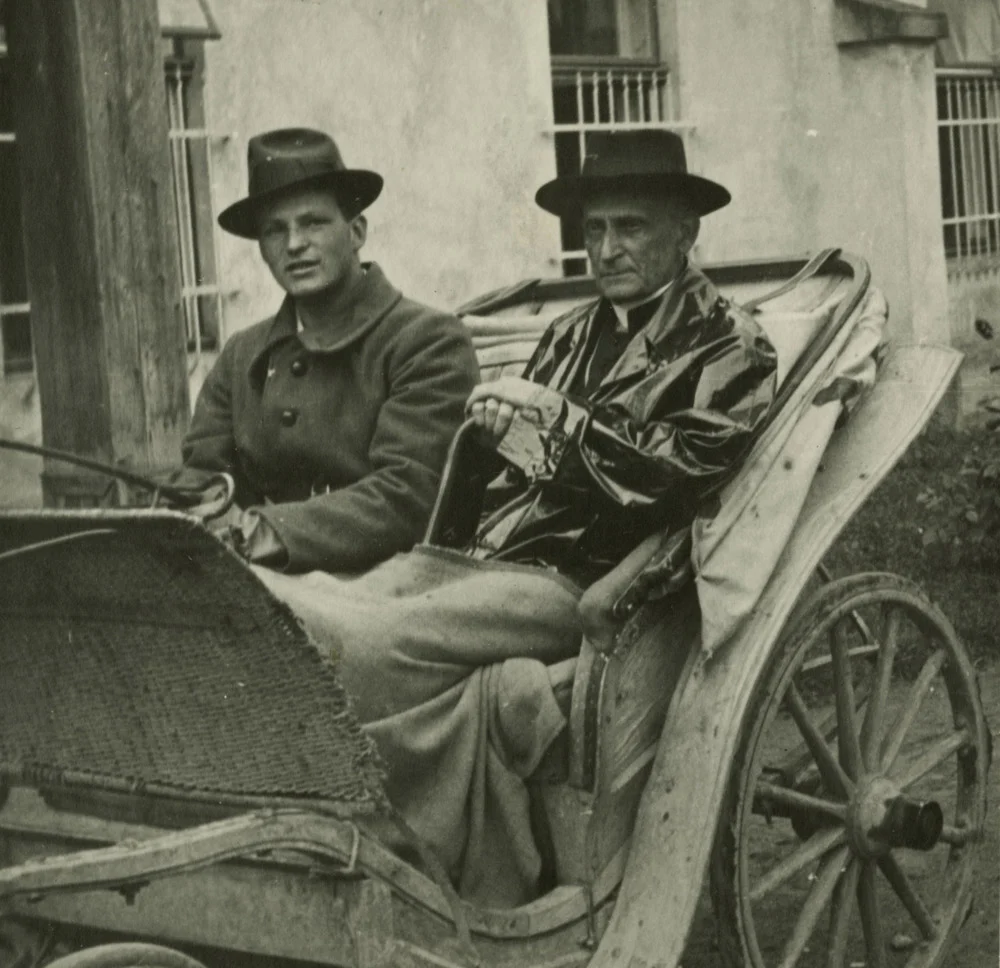
The War
When war came in 1939, the Stadnicki family was drawn into the underground resistance. Józef (Józio), though paralysed, became the chief local commander of the Armia Krajowa (Home Army). His father, who spoke flawless German, feigned ignorance of the family’s clandestine activities. On one occasion, during a Gestapo raid, he stalled the officers with a long phone call while contraband was hidden elsewhere in the house. The Germans placed a bounty on Józef’s head, yet he evaded capture.
Jadwiga remembered one image from September 1939 with particular clarity: Polish soldiers retreating across a field while Germans advanced, and in the middle of it all a farmer standing calmly with his cap and moustache, as if nothing were happening — “a wonderful symbol.”
Jadwiga’s own husband Adam Czartoryski fought through the entire campaign, from Poznań to Warsaw, while she waited at the Czartoryski estate in Pełkinie with their ten-month-old son Jerzy, not knowing whether he was alive or dead.
The Stadnicki Siblings’ Fates
After the war, the family was scattered across the world. Maria married the medieval philosopher Stefan Świeżawski, who would serve as a lay advisor at the Second Vatican Council. Paweł, the youngest, became an architect in Paris and worked on the design of Orly and Roissy airports. Others settled as far away as South Africa. The Nawojowa estate was confiscated under communist land reform, and the family adapted to a new reality — without bitterness, but never forgetting what had been lost.